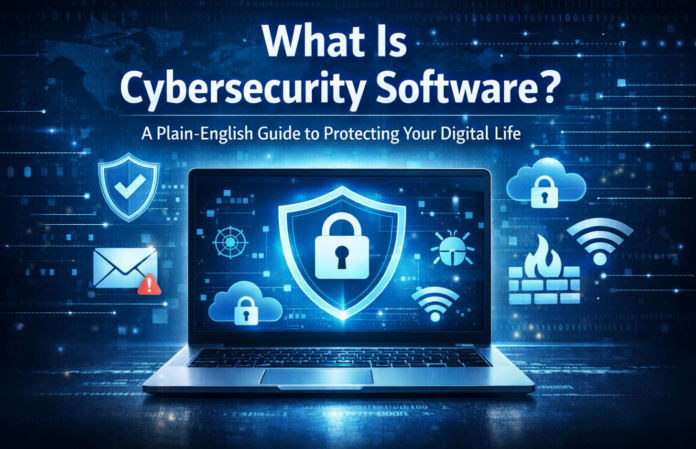

Category: Cybersecurity | Read time: 10 min
Every day, hackers send out billions of malicious emails, deploy thousands of new malware strains, and probe millions of networks for weak spots. The only thing standing between your data and those threats? Cybersecurity software. Here’s everything you need to know – no jargon required.
Table of Contents
- What is cybersecurity software?
- Why every business (and person) needs it
- Types of cybersecurity software
- How to choose the right tools
- Top features to look for
- Common cyber threats these tools defend against
- Frequently asked questions
1. What Is Cybersecurity Software?
Cybersecurity software is a program that protects computers, networks and data from access. It’s like a security guard for your activities. Whether you’re checking email or storing files in the cloud.
This software includes tools, such as antivirus software on your laptop and platforms that monitor entire corporate networks. At its core cybersecurity software finds threats, blocks attacks. Helps organizations respond quickly to problems.
Quick definition: Cybersecurity software = tools that detect, prevent, and respond to digital threats targeting your devices, networks, and data.
2. Why Every Business (and Person) Needs It
Cybercrime can happen to anyone, not big corporations. Small businesses, freelancers, hospitals and schools are all targets. A single data breach can be costly both financially and in terms of reputation.
- The average cost of a data breach in 2024 was $4.9 million
- More than 2,200 cyberattacks happen every single day
- 95% of breaches involve some form of human error
Cybersecurity software gives you peace of mind. It works quietly in the background scanning files checking network traffic and monitoring logins so you can focus on what matters without worrying about the threat.
3. Types of Cybersecurity Software
There is no one tool that does everything. Good cybersecurity uses tools together to cover different areas. Here are the main categories you should know about:
Antivirus & Anti-Malware Removes viruses, ransomware and spyware from your devices. This is usually the defence for most users. Antivirus and Anti-Malware tools help keep your devices safe.
Firewall Software It monitors your network traffic. Blocks suspicious connections. This helps keep your network safe.
VPN (Virtual Private Network) encrypts your internet connection. It hides your IP address. Keeps your browsing private. This is especially useful on Wi-Fi.
Password Manager Generates strong passwords for every account. This way you never reuse a password. Password Manager tools help prevent breaches.
Intrusion Detection and Prevention Systems (IDS/IPS) monitor your networks for activity. They can block attacks before they cause damage. IDS/IPS tools help keep your networks safe.
Cloud Security Tools protect your data, apps and infrastructure in environments like AWS, Google Cloud or Microsoft Azure. Cloud Security Tools are important for cloud users.
Email Security Software filters out phishing emails, spam and malicious attachments. This helps keep your inbox safe.
SIEM Platforms (Security Information and Event Management) Aggregates security data from across an organization and provides real-time alerts, logs, and analysis for security teams.
Endpoint Protection (EPP/EDR) secures devices, like laptops, phones and servers. It detects threats that bypass antivirus tools. Endpoint Protection tools help keep your devices safe.
4. How to Choose the Right Cybersecurity Software
There are many products out there it can be really tough to choose the right tools. The good thing is, you do not have to buy everything all at. Start by asking yourself a simple questions.
What are you trying to protect? A solo freelancer who works from a laptop has different needs than a 500-person company with a distributed workforce and a cloud infrastructure. Make a list of what you have. Devices, data, applications, users. Before you start shopping for software.
What is your biggest risk? If you handle customer payment data you should focus on encryption and compliance tools. If your team works from home a good VPN and endpoint protection are important. If email is how people usually attack you you should invest in a good email security gateway.
What’s your budget? There are great cybersecurity tools that offer free versions or affordable plans for individuals and small businesses. You do not need to spend a lot of money to be protected. Start with the basics. Antivirus, a firewall and a password manager.. Add more cybersecurity tools from there.
Pro tip: Look for cybersecurity platforms that bundle multiple tools (antivirus + VPN + firewall) under one subscription. They’re often more cost-effective and easier to manage than buying separate products.
5. Top Features to Look For
Not all cybersecurity software is created equal. When evaluating tools, prioritize these must-have features:
- Real-time threat detection and automatic blocking – not just scheduled scans
- Automatic updates so protection stays current as new threats emerge
- Low system impact – it shouldn’t slow your computer to a crawl
- Multi-device support (Windows, Mac, iOS, Android)
- Clear, actionable alerts – not cryptic error messages
- Centralized dashboard if managing multiple users or devices
- Compliance support (GDPR, HIPAA, etc.) if relevant to your industry
- Responsive customer support you can actually reach when something goes wrong
6. Common Cyber Threats These Tools Defend Against
Understanding what cybersecurity software does helps you see why it is important. Here are common threats:
Ransomware locks up your files. Asks for money to unlock them. It can spread fast across an organization. Having endpoint protection and backups is key. Ransomware is news and you need to protect against it.
Phishing Attacks are emails or websites that try to trick you into giving away your passwords or credit card info. Most email security tools and browser protections catch these before you even see them. Phishing attacks are sneaky. You have to be careful.
Data Breaches happen when sensitive info, like customer data or financial records leaks out. Firewalls, access controls and encryption tools all work together to prevent this. Data breaches are serious. You need to protect your data.
Zero-Day Exploits are attacks that use software weaknesses before the developers can fix them. Some antivirus tools can spot these threats even if they don’t have a fix yet. Zero-day exploits are tricky. Good antivirus helps.
Insider Threats can come from within an organization. An employee or someone who clicks the wrong link. Tools that watch user behavior and manage access can help spot and limit these risks. Insider threats are real. You need to watch out for them.
“Cybersecurity is not a product you buy once. It’s an ongoing practice — and the right software makes that practice sustainable.”
7. Frequently Asked Questions
Is free cybersecurity software good enough? Free tools can give you a level of protection. For personal use they are often fine. However they usually do not have features like real-time threat intelligence or technical support. For businesses or anyone who handles data it is highly recommended to use a paid cybersecurity software.
Do I need cybersecurity software if I use a Mac? Yes you do. The idea that Macs cannot get viruses is old. There is a lot of malware that targets Macs now. You absolutely need cybersecurity protection on your Apple devices too.
What is the difference between antivirus and cybersecurity software? Antivirus is a type of cybersecurity software that focuses on detecting and removing malware. Cybersecurity software is a term that covers many tools like firewalls, VPNs and identity management.
How often should cybersecurity software be updated? Updates should happen automatically all the time. Threat databases are updated times a day. If your software is not updating itself automatically you should enable that setting now. Outdated cybersecurity software does not offer protection.
What is cybersecurity software management (WBSoftwareMent)? Cybersecurity software management refers to the process of deploying, updating, monitoring and optimizing your cybersecurity software tools. Good management means your tools are always set up correctly up to date and working together.
Can small businesses afford proper cybersecurity software? Yes they can. Many top vendors offer plans for small businesses. A good set of cybersecurity tools. Including antivirus, VPN, firewall and password manager. Can cost less per month, than a software subscription. Not protecting your business can cost you a lot more.
Bottom Line
Cybersecurity software isn’t optional anymore – it’s as essential as locking your front door. The right combination of tools protects your data, your customers, and your livelihood from threats that are growing more sophisticated every year. Start with the basics, layer in more protection as you grow, and treat security as an ongoing priority rather than a one-time purchase.

